
How Artificial Intelligence Can Transform U.S. Energy Infrastructure
In the face of accelerating climate change, the U.S. aims to reduce the net carbon emissions of its economy to zero by 2050. Achieving this goal will require an unprecedented deployment of clean energy technologies. And a significant transformation of the nation’s energy infrastructure.
It is an exceptionally complex and daunting challenge. But it is not impossible if we harness the transformative capabilities of artificial intelligence (AI) to help.
This is according to a groundbreaking new report issued by leading energy researchers and scientists from across America’s national laboratories. The report is titled AI for Energy. It provides a bold framework for how the U.S. Department of Energy (DOE) can use AI to accelerate the nation’s clean energy transformation.
“AI can manage complexity and make connections across multiple scientific and engineering disciplines, multiple model and data types, and multiple outcome priorities. This can enable AI to create solutions for the ‘grand challenges’ of massive and rapid clean energy deployment that conventional methods cannot,” said Rick Stevens, associate laboratory director for the Computing, Environment and Life Sciences directorate at DOE’s Argonne National Laboratory.
The report identifies grand challenges across five areas of the U.S. energy infrastructure. These include nuclear power, the power grid, carbon management, energy storage and energy materials. Three common needs emerged across these challenges. The first is the need for quick and highly reliable computer-aided design and testing of materials and systems. The second is the need to improve scientists’ ability to pinpoint uncertainties in their predictions and how systems will perform. The third is the need for AI to integrate data from multiple sources and formats.
“AI’s ability to manage complexity and make connections across multiple disciplines, models and data types can help us solve the ‘grand challenges’ of clean energy deployment in ways that conventional methods cannot.” — Rick Stevens, associate laboratory director for the Computing, Environment and Life Sciences directorate at Argonne
If the U.S. can overcome these challenges, the benefits could be significant.
“AI has the potential to reduce the cost to design, license, deploy, operate and maintain energy infrastructure by hundreds of billions of dollars,” said Kirsten Laurin-Kovitz, associate laboratory director for the Nuclear Technologies and National Security directorate at Argonne. “It can also accelerate design, deployment and licensing processes. These can account for up to 50% of the time it takes a new technology to get to the marketplace.”

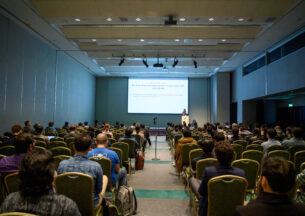
Capturing this potential will require scientists, industry players and policymakers to work together more closely than ever before. The AI for Energy report represents a strong first step. Approximately 100 experts from the fields of AI, machine learning and energy met at Argonne for two days in December 2023. Their goal was to map out how best to use AI to solve U.S. energy challenges. Attendees then worked together for three months to create the report.
The report was produced by Argonne and DOE’s Idaho National Laboratory, National Renewable Energy Laboratory and National Energy Technology Laboratory. Additional key contributors included DOE’s Brookhaven National Laboratory, Lawrence Berkeley National Laboratory, Lawrence Livermore National Laboratory, Los Alamos National Laboratory, Oak Ridge National Laboratory, Pacific Northwest National Laboratory and Sandia National Laboratories.
“Argonne is grateful for the opportunity to leverage its expertise in helping drive the AI for Energy effort,” said Claus Daniel, associate laboratory director for the Advanced Energy Technologies directorate at Argonne. “We are excited to help DOE drive U.S. global leadership in clean energy technology. And help DOE achieve its mission to secure U.S. energy independence and security for decades to come.”
You can read the entire AI for Energy report here.
This article was originally published by Argonne National Laboratory.